It’s a sad state of affairs that at a time when senior citizens abound, elders are thin on the ground.
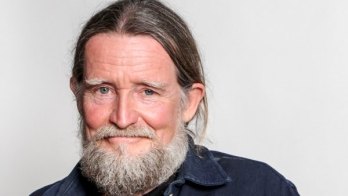
In his new book, Come of Age, Stephen Jenkinson makes the case that we must birth a new generation of elders, one poised and willing to be true stewards of the planet and its species. Earth Day (April 22nd) reminds us that we are but one of many species and our welfare is inextricably connected with their welfare. At a time when so many species are suffering at the hands of humans, the call for elderhood has in many ways never been greater.
Come of Age does not offer tips on how to be a better senior citizen or how to be kinder to our elders. Rather, with lyrical prose and incisive insight, Stephen Jenkinson explores the great paradox of elderhood in North America (read Australia): how we are awash in the aged and yet somehow lacking in wisdom. Our own unreconciled relationship with what it means to be an elder has yielded a culture nearly bereft of them.
Meanwhile, the planet boils, and the younger generation boils with anger over being left an environment and sociopolitical landscape deeply scarred and broken.
Taking on the sacred cow of the family, Jenkinson argues that elderhood is a function rather than an identity–it is not a position earned simply by the number of years on the planet or the title “parent” or “grandparent.” As with his seminal book Die Wise, Jenkinson interweaves rich personal stories with iconoclastic observations that will leave readers radically rethinking their concept of what it takes to be an elder and the risks of doing otherwise. Part critique, part call to action, Come of Age is a love song inviting all of us to grow up, before it’s too late.
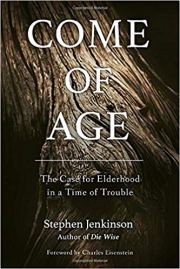
Working in palliative care for years, Stephen Jenkinson witnessed what he described as a wretched anguish amongst people facing death. In his new book Come of Age: A Case for Elderhood in a Time of Trouble he argues that our society lacks the kind of leadership we normally seek from our elders.
On Nightlife with Suzanne Hill (ABC local radio, 21 April 2019) Jenkinson shares some thoughts on what it means to be an elder. Listen here: This Mortal Coil: Stephen Jenkinson on the dearth of elders in our society
Duration: 33min 23sec Broadcast: Sun 21 Apr 2019, 10:00pm
And this is the invitation to hear Stephen at Clemenger Theatre, St Kilda Rd, Melbourne VIC. April 26th.
For most of the 200,000 years of human life on earth, we have learned from our elders. We have been cared for, guided by, challenged and initiated into the world by the wisdom elderhood gifted to us. Our lives and our communities have been strengthened by those who have come before us.
Today, the journey of personal development surrounds us with self-help books, leadership forums, retreats, therapists and life-coaches, yet there is a significant lack of intention to engage deeply with our elders as a key component of our education. Elderhood today is often understood more in terms of its absence rather than its presence.
In a pursuit to prolong human life through everything from bio-technology and pharmaceuticals to anti-aging skin creams, we are a culture increasingly obsessed with eternal youth. How does this compromise our ability to value age and the wisdom which comes from those who understand and respect the finality of life?
It is often said that age carries wisdom, yet at a time when we have more older people than we ever have before, why are there so few elders among us? What constitutes an elder and how do we re-engage with generational wisdom-sharing? Stephen Jenkinson at School of Life









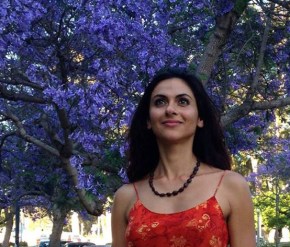 This story from Ari Honarvar Resilience Through Rituals, A grounding source for connection essential to our mental health, (Yes! No.88, Winter 2019) throws some light on why rituals still have meaning and are still practiced across the world. “I don’t know if I could have survived seven years of my childhood without the soul-saving rituals of my Persian culture,” says Honarvar. “I grew up in the midst of the Iran-Iraq War, which ended up killing a million people. Besides the horrors of war, freedom of thought and expression were severely restricted in Iran after the Islamic revolution.”
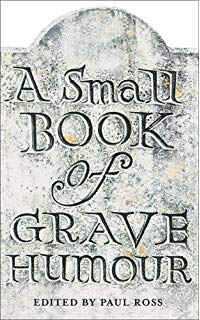 What’s to be said following the death of a partner, friend, child, colleague; someone we hold dear who has died?
 In times past, before access to technologies like the internet, we tended to live in our somehwat isolated little bubbles believing that most other people were probably not all that much different for us. This is no longer the case. At the click of a ‘mouse’ a whole world of difference is revealed. For each of these ‘different’ groups what we might consider odd or bizarre they consider to be not only normal but traditions and rituals to be cherished and practiced as if their lives depended on them. Not unlike the traditions and rituals that we engage in. Such is the power of belief and the influence of groups to convince us to behave in certain ways, irrespective of whether or not these beliefs make sense to others. This story demonstrates the strength of beliefs to influence our behaviour.


 Die-alogue Cafe