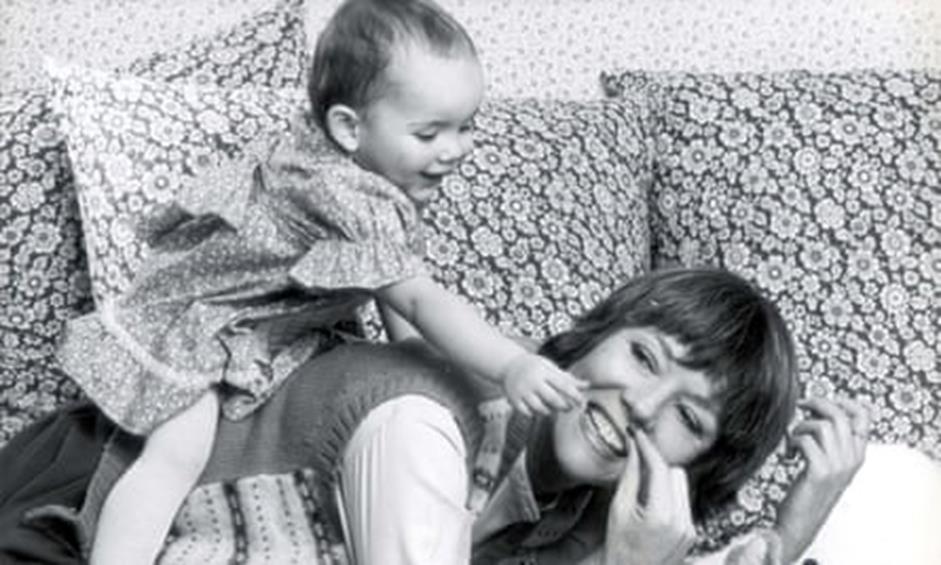
End of life is not for wimps. When Ma was very weak and the nurse came to insert her catheter, I sat listening from my bedroom next door. My mother still wanted dignity and privacy when she could get it. It was only afterwards that I realised the nurse had inserted it without offering anaesthetic cream or any local pain relief, but my mother was too tired to protest. I was furious. Unnecessary pain was the thing I’d promised I would protect her from. Unnecessary suffering. It was a promise that I could not keep.
Rachael Stirling reflects on her mother’s final months – and listens back to the recordings the actor made then, racked with pain, as a passionate advocate of assisted dying.
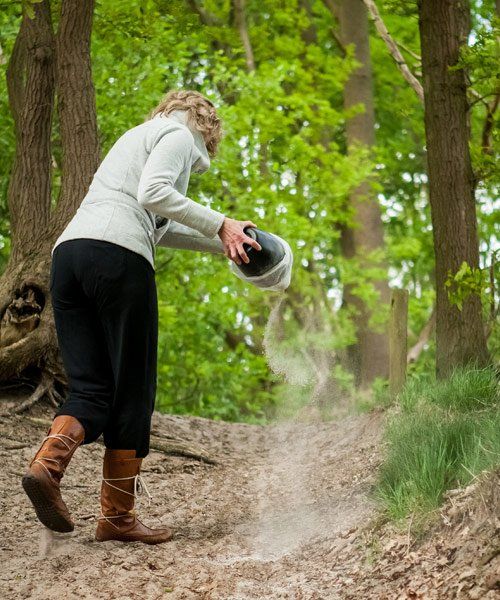
There are many rules and supposed regulations around the scattering of ‘ashes’ – the cremains – of someone who has died.
This story reminds us that various authorities, namely those of a religious nature, have rules and protocols that they require their adherents to abide by.
Having noted this, the flouting of these rules is widespread. And, this is the crux of the matter, who is out there supervising and monitoring the families of the deceased to see what they are doing? No one.
The latest group to see that perhaps having rules that few people follow is a bit pointless is the Catholic church. Georgie Hewson writes: The Vatican softened its stance on what Catholics can do with a loved one’s ashes. But there are still rules, (ABC News, 13 Dec 2023)
The Catholic Church has relaxed its rules on what families can do with a loved one’s ashes when they pass. The changes, allow Catholics to store a small part of the ashes in a place that was dear to the deceased. It’s a small but significant change for Catholics, who make up 25 per cent of the Australian population.
The church first permitted cremation in 1963, but it has been a point of contention ever since. Here’s what it means. What were the rules?
In the most recent previous guidance in 2016, the Vatican said the ashes must be kept in “sacred places” such as a Catholic church or cemetery.
Vatican’s ashes instructions: The ashes were not to be kept at home, divided among family members or scattered to the wind. It warned that a Christian funeral could be denied to those who request that they be scattered. The 2016 instruction, published in the lead-up to All Hallows’ Day, which honours the dead, said “new ideas contrary to the church’s faith have become widespread”.
Only in “grave and exceptional cases” would the ashes be permitted to be kept in a home, the church said. “It is not permitted to scatter the ashes of the faithful departed in the air, on land, at sea or in some other way, nor may they be preserved in mementos, pieces of jewellery or other objects,” it said.
For centuries, the practice was banned because it clashed with teaching about resurrection of the body in the Last Judgement.
Truth be known, these rules will be relaxed again in the future, since they are not adhered to by their adherents. It takes a long time for the upper echelons of these large organisations to ‘get it’. Read the full story at the highlighted link in the headline.
While some, many, people find the dying and death subject ones to be avoided, others find them fascinating and intriguing. So much so, that they go in search of people who think about and work in these fields of life.
One such person is Hayley Campbell, who has spent the last three years talking, thinking and writing about death. She has interviewed a gravedigger, a pathologist, a bereavement midwife, even an executioner.
Their words and experiences, and those of eight other people who work closely with the dead, form the basis of her powerful and personal new book, ‘All the Living and the Dead’. But her first interview was with Poppy. We asked her why she started there.
“I had always wanted to talk to a funeral director. I found Poppy by accident. Without Poppy, this would have been a very different book. She changed the whole tone. It was life-changing for me.”
Read the full story at the highlighted link above.
And hear Hayley speak about her experiences and the reasons why she wrote the book, in this program on ABC radio: Hayley’s morbid curiosity, Conversations, with Richard Fidler, Broadcast Wed 22 Nov 2023 at 11:00am
…………………………………………………………………………………………………………………………
Tapestry with Mary Hynes, is an audio program, with this episode titled: After life: Finding meaning at the end. Play Episode: 53:52
There are two topics that tend to send some people recoiling from a conversation: aging and death. We hear from people who are confronting both — and changing the way people think about the end of our lives. Aired: Oct. 29, 2023
In this rough and tumble world where everyone seems to be clamoring for more, the words of some the philosophers from time long ago still bring us back to earth – literally.
In this article: Seneca: To Find Peace, Stop Chasing Unfulfillable Desires, Jack Maden, writing in Philosophy Break, November 2023, notes that:
Seneca argues that chasing things like wealth or fame will result in a life that feels perpetually unfinished: “if, no matter how far you travel, there always seems to be some further place you need to reach, that is a sure sign that the desire is contrary to nature…”
PICTURE: Born in 4 BCE, Seneca was a Roman Stoic philosopher who tutored emperor Nero. Seneca’s influence over Nero declined with time, and in 65 CE Seneca was forced to take his own life for alleged complicity to assassinate Nero — an accusation of which he was likely to have been innocent. His stoic and calm suicide has become the subject of numerous paintings, including the one above by Peter Paul Rubens, c.1614.
In a letter to his friend Lucilius, the ancient Roman philosopher Seneca (4 BCE – 65 CE) reflects on the following statement from the ancient Greek philosopher, Epicurus:
If you live according to nature, you will never be poor; if you live to please the opinions of others, you will never be rich.
Commenting on this observation, Seneca adds:
For nature has very few demands, whereas the tyranny of opinion is immense.
To illustrate this point, Seneca asks Lucilius to imagine what would occur if he inherited vast wealth:
Suppose you inherit the estates of many rich men. Fortune carries you well beyond the normal limits of a private income and covers you with gold, clothes you in the finest purple, and brings you to such an apex of luxury and wealth that you can pave your land with marble till you not merely possess riches but actually walk on them. On top of this you have statues, paintings and the ultimate adornments of luxury that any of the arts can devise…
What might the result of all this wealth be? Would Lucilius find long-term happiness at last?
Probably not, Seneca writes. In fact:
The only thing you will learn from all this will be to want still more.
Indeed, the problem with things like wealth and fame is that they have no limit: there is always more popularity to secure; always more money to accumulate.
What seemed enough yesterday has simply reset today’s baseline: we must have more.
As Seneca writes:
The desires implanted by nature [i.e. for food, water, human connection] have a limit, but those born from false opinion have no way of reaching an end…
If we measure ourselves according to external status symbols, we will never be satisfied ― for where does it end?
While on the philosophy theme, let’s include a reference to a another wise sage.
In: The Life of Epictetus, Neel Burton (Philosophy Today, 24 November 2023) notes that … He was a Roman slave who freed himself and millions of others.
Key points
Epictetus, a Stoic philosopher, taught focus on what you can control and accept what you cannot.
After gaining his freedom from slavery, he opened his school and taught the emperor Hadrian.
His teachings have had a lasting impact on Western thought, influencing thinkers such as Descartes.
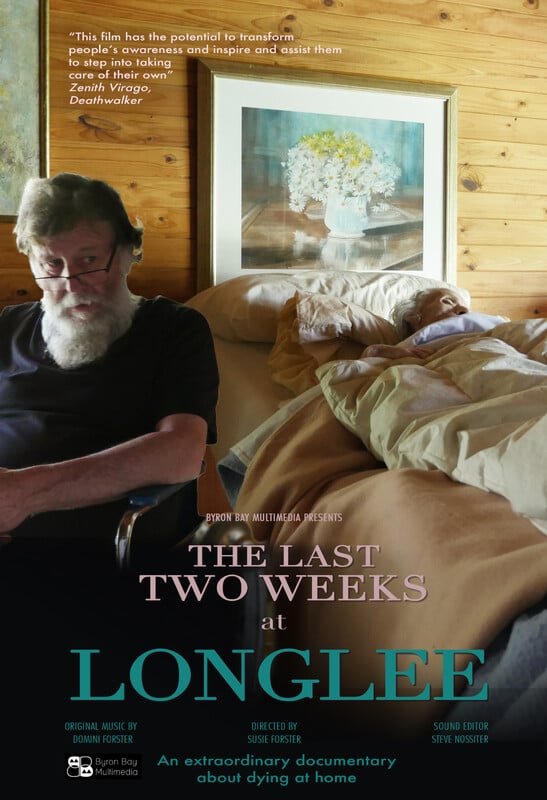
Taking care of our own. What’s involved? This film sheds some light on the subject.
When Victorian artist Lee Stephenson discovers she is dying and requests, in no uncertain terms, to die at home, her daughter, a filmmaker, captures this extraordinarily personal window into the last two weeks of her life.
Candid and highly personal, this 72 minute documentary unflinchingly reveals the last two weeks of Victorian artist Lee Stephenson’s life, as her family work together to grant Lee her final wish – to die at home. www.byronbaymultimedia.com.au/the-last-two-weeks-at-longlee/
Watch here …
Shot at “Longlee,” her mother’s art-filled home in the stunning Goulburn Valley, we witness the 82-year-old artist navigate her impending death, veering between grace, anger, clarity and confusion.
While we are encouraged to put in place Advance Health Care Directives, and ensure we have substitute decision makers in the form of an Enduring Guardian for our health and well-being and with a Power of Attorney for our finances and property, there is what might seem to be the more mundane issues of personal property – all the things we’ve accumulated over a life time living in a material society that encourages the collection of stuff.
This is where it can be hard to let go of all those things that have sentimental value, personal stories associated with their purchase or in other cases gifts from family and friends or acquired at anniversary times.
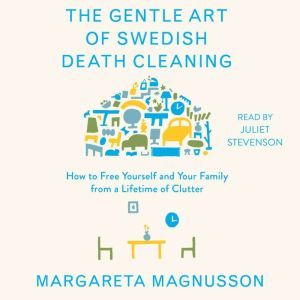
Enter what’s known as the Swedish Death Cleaning concept. It could be said that it’s a fancy way of saying we need to get things sorted, except that there is a bit more urgency in that it involves not leaving a mess behind when we depart this mortal coil. Click on this link to find out more.
Swedish Death Cleaning is the brainchild of author Margareta Magnussen, who coined the term in her 2017 book The Gentle Art of Swedish Death Cleaning:How to Free Yourself and Your Family from a Lifetime of Clutter. Magnussen asks her readers to consider the loved ones who must comb through your possessions after you’ve died, providing suggestions for making their experience as easy as possible.
It’s long been known that when times are hard and nothing seems to be going right, getting into the bush or some other nature space can work wonders on the mind and help us sort out our worries – to rebalance the brain and bring us some sense of normality.
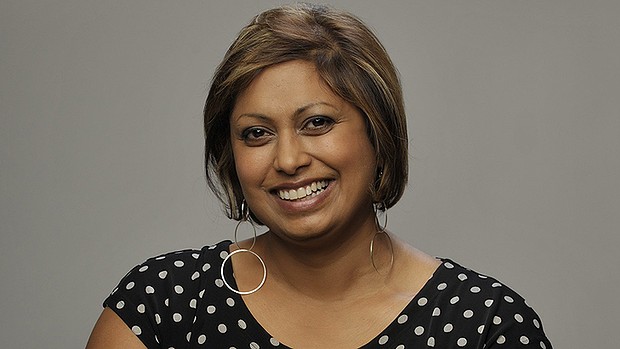
In these extracts from a book by Indira Naidoo, we have tried to capture the essence of how she recovered from the tragic death of one of her sisters.
The Space Between The Stars, by Indira Naidoo, 2022
Ch 6 – Tree of Life
Parts of my urban backyard have relished the rain. Beyond the naval fleet across Woolloomooloo Bay – Sydney’s Royal Botanic Gardens is bursting with vigour. The grassy slopes are a vibrant green and the trees seem to have expanded from the deluge.
Why does seeing that wedge of green wildness make my battered heart soar so? Many others are fascinated by this question. One of the books keeping me company on my morning walks has been Healing Spaced: The Science of Place and Well-being, by American neuro-immunologist Dr Esther Sternberg. She believes the restorative impact of nature has much to do with the colour green itself. Our yellow-green vision was the first to evolve. Green sits roughly in the middle of the light spectrum, not at the edges, making it more relaxing for our brain to process the visual information.
(Indira has adopted a fig tree – so much so that she writes ‘the tree has become mine.’)
Just seeing my tree again makes me feel immediately nourished.
Dr Sternberg says this soothing reaction isn’t unique to me but is an example of biophilia at work. Biophilia is a term popularized by American biologist E.O.Wilson in the 1980s to explain our innate need to connect with the natural world. But as far back as Aristotle, thinkers and philosophers have noted our affinity with living systems and the happiness they bring us. Sunlight, fresh air, forests, flowers, birdsong, beaches – isn’t that what we dream of escaping to when we’re trapped in our fluorescent-lit, air-conditioned office towers? No one daydreams about pitching a tent in the middle of an expressway. Pages 39-41.
…. Not only does a tree look after itself, but it is a refuge for other creatures – possums, spiders, birds, insects – perhaps a human or two without a bed for the night. A community Airbnb.
When it comes to surviving, trees have hot it all over us.
I want to learn to be more like a tree. Strong. Resilient, Permanent. Page 42
Someone who knows a lot about trees is Royal Botanic Gardens horticulturalist Paul Nicholson, who runs the Gardens’ volunteer and visitor programs, but this quote on his bio page, abut why he loves his job intrigues me. [I like] helping people understand that plants are central to their lives, that plants are interesting, exciting, engaging and the more time you spend with plants the happier you are likely to be. Page 43.
[The gardens] was a sacred site for Indigenous tribes, an initiation site or bora ground, and now it’s a spiritual meeting place for modern day Sydneyshiders. Even though there are more than 25,000 plants on these 30 hectares, it’s the tree elders that link the past to the present. They are the time travelers. Page 45.
Ch 8 – Birds of a Feather
When I take my walk and I’m with my tree, there are no disturbing sounds or sudden visual jolts. No drilling or droning, grinding or grating. Time passes in soothing waves of serenity The light is filtered, souncs are subdued: the tranquility of green silence pervades everything, as British nature writer Robert Macfarlane so perfectly describes it. Page 57
[Within the Gardens] the Summer is lazily unwinding into autumn. Piles of papery brown leaves from the plane tree carpet the pavement ….
The way they pirouette in the wind with such playfulness and vitality it’s almost impossible to view them as no longer alive. But that is technically what they are. Departed, Expired, Deceased.
… the leaves may be dead, but I’m beginning to understand more deeply the nanturaliness in their passing. They’ll decompose and nourish more life. The branches of the plane tree above me will soon be sprouting new green shoots, eager to take their place in the continuum.
….. Eventually everything must return to the earth. I’m seeing that more clearly now. Death doesn’t have to be a rip in the universe.
It’s something reinforced in the insightful wirtings of English psychiatrist and psychotherapist Sue Stuart-Smith. Her book The Well Gardened Mind is bobbing along in my canvas shoulder bag.
…. Being in nature reminds her of the continuity of life and how our day-to-day lives are part of the cycle of death. But she warns: If we think about dying too much it interferes with living, but if we never think about death, we remain seriously unprepared.
Urban nature is constantly giving us clues to this life-and-death cycle with the ephemera it scatters across our path. It’s not only trees and plants that shed parts of themselves. Birds are discarding their plumage constantly.
[A feather on the footpath should be a reminder of something more than waste to be swept aside] They are glorious sculptures of keratin that enable birds to ride the winds in any direction while keeping them warm and dry and protected. Pages 64 and 65
Chapter 10 – On a Wing and a Prayer
There’s actually a birdwatching term for returning to the same palce agains and again to identify and study the birds in the area. It’s known as atlassing – and in a way, I imagine my regular visit to my tree have been a form of atlassing. I’m discovering that the world of birdwatching is a mysterious one. The terminology alone can be bewildering.
I’m apparently a dude – a birdwatcher who doesn’t know much about birds. A stringer is someone who incorrectly records sightings of birds. And a twitcher is a birdwatcher preopared to travel great distances to see a rare bird and cross it off their bucket list. To dip is to miss out on seeing a bird you are looking for. And to grip is to see a bird another birder has missed and to tell them you’ve seen it. (This sounds more like gloating to me.) page 79.
[ Steve Abbott is a bird observer and ABC Radio program producer. Like Indira he has experienced grief from the death of loved one.] Steve shares stories of his own grief when his mother died, and reassures me that the old cliché that time heals is indeed true but true but the wait can be agonizing. Page 82.
Steve’s interest in birds led to a ten-part documentary series for ABC Radio called Bird Brain, ( reference:
Even in death the ties are strong for birds. Steve once witnessed an extraordinary scene on his suburban street in Bondi. A magpie had been killed by a passing car and its body lay stiff and lifeless in the middle of the road. Several other magpies had gathered round the body, staring with heads bowed – a phenomenon ornithologists refer to as a bird roadside funeral. Steve says observe wild birds mourning the death of another in this way was one of his most sorrowful encounters. Do birds experience grief the way humans do? The jury is out on that one, say the researchers. What seems like displays of maternal or kinship mourning may simply be confusion. Pages 84 and 85.
Chapter 12 – Weeds in the Cracks
[ Diego Bonetto is of Italian heritage with a love of wild plants especially what we refer to as weeks.]
Being oblivious to the weeds along the paths where we walk, is what Diego calls plant blindness. He says the foraging classes he conducts through the suburbs and along coastlines are important because once you know the name of a plant or tree you can no longer ignore it. Give something a name and it will always demand to be seen.
Even the majestic plane trees above us have value beyond their shade. Their sap can be tapped for a syrup similar to maple syrup. Pharmaceutically, plane trees are medicine cabinets. Some people boil the bark in vinegar for the treatment of toothache and diarrhoea. Their leaves may also be bruised and applied to the eyes to treat conjunctivitis and other inflammations.
Another plant, this time one referred as an invasive species is called the madeira, a South American émigré classed as a highly invasice weed that is choking native vegetation all along Australia’s subtropical coast. Diego explains it’s a hardy perennial that enjoys scaling trees and then hanging in wide curtains of heart shaped leaves and flowers. What many disparaging articles won’t tell you is that it also edible. It’s eaten extensively in Japan, according to wild food and permaculture expert Kirsten Bradley from Miikwood. It’s known as okawakame or land seaweed. It’s bright green leaves are used like a spinach in stir-fries, and the vine’s roots can be baked like potatoes.
Why not harvest and cook them? Diego asks. Pages 99 – 100
Chickweed and Fat hen are also useful weeds that can be harvested, says Diego.
The domain of many weeds may be within the cracks, but cracks are where the light gets in. Pages 101 – 103
Chapter 13 – Peas in a Pod
[Indira was one of a closely knit sister threesome. But the three became two when one of her sisters took her own life.]
How did a plum tree in a Melbourne suburban backyard almost fifty years later become a makeshift gallows for the brightest star in our trio? This plum tree, a symbol of life and strength and protection, was coopted into the most horrific of roles.
My fig tree has been giving me back my life; Stargirl used a plum tree to take away hers.
As Stargirl climbed into its branches, the night air dank and brooding, and slipped the chain around her neck, the only witness to her final precious moments was this tree. A silent sentinel that could not move, that could not scream.
The arborist comes the week after Stargirl’s death to remove the tree. It’s a punishment for being in the wrong place at the wrong time. Its black trunk and purple leaves are all that remain of the dark grisly deed that transpired under its branches. The arborist has seen this tragedy played out many time. He has had to remove many trees like this, trees used in this way by the agonized and tormented. Tress removed in the hope of erasing the awfulness of the memory. He knows it never works. Pages 109 – 110
Dying with Dignity NSW has been hosting webinars on subjects of great relevance to members and friends, covering issues that are overlooked or misunderstood by many people.
The truth is death is not a medical event, it is a profoundly personal, individual, family and community event.
Where once we would have cared for our ageing and dying at home, these days our elders are cared for in aged care facilities and hospitals, which can often contribute to an isolated, lonely and dis empowered end of life.
This is the third in the series.
It follows on from the first two webinars: ‘The Importance of Advance Care Planning’ and ‘Empowering the Elderly – How to Avoid the End-of-Life Conveyor Belt’,
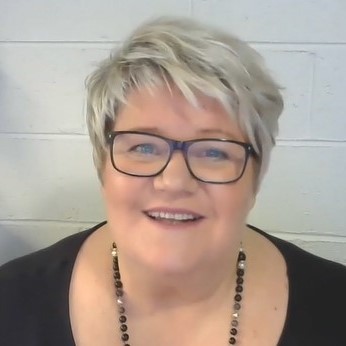
In this webinar, we hear from three End of Life Doulas.in: ‘End of Life Doulas – Bridging the Gaps in Care’ The three experienced guests for the topic are – Helen Callanan (picture below), Jancine Hurst and Carolyn Vaughan.
To view the other two webinars, click on this link: DwD-NSW webinars.
The aim is to have a positive impact on the environment rather than a negative one, according to Dr Bryan Furness. There’s a much better chance of achieving that with a shroud than a coffin. Anne Furness says natural burial was “the only way to go”.
PICTURE: Bryan and Anne Furnass are planning to be laid to rest near a stand of trees on the north side of Canberra. Photo credit: Rohan Thomson
Ross Peake in: We want to be buried in just a shroud – no coffin, thanks (Canberra Times, April 24 2018) reports that …
However, instead of the traditional coffin, deep in the earth, they want to be buried in just a shroud, at a more shallow level.
Their wish for a natural or green burial will be granted, with a section of the Gungahlin Cemetery being put aside for burials without coffins.
Cardboard coffins were already allowed in the ACT for burial and cremation, and people of the Muslim faith could be buried in the ACT in a shroud, without the need for a coffin.
The new site at Gungahlin Cemetery means people can be buried in a shroud or a biodegradable casket, among the Eucalyptus mannifera (brittle gum) and Eucalyptus melliodora (yellow box) in a natural one-hectare bush setting.
For those who wish to be cremated, their remains will be placed in a biodegradable container or placed directly into the earth.
Dr Furnass says that: “Humans are the only species that traditionally had to intervene [after death], normally all other species have been returned to the environment when they die, either to be eaten by predators or to rot,” he said.
“Natural burials are a system whereby your body is buried at a shallower level than normal burials and therefore it composts rather than decomposes.
“It gives people an extra choice between bury, burn or compost.
“Composting is where you’re burying the body where there is plenty of bacteria around, whereas with decomposing, it takes years to properly decompose, so composting is a natural harnessing of microorganisms to digest the body.”
“With natural burials, your decomposing body helps to feed the trees, it’s a nice natural circle.
“One of the disadvantages of combustion with cremation is very high temperatures are required, quite a lot of greenhouse gases are released.
“Natural burials avoid that and at the same time provide a pleasant sort of environment where your offspring can visit where you are buried and have a party or something.
“Because, apart from anything else, the trees will be absorbing the CO₂, so environmentally, it’s very much better than the other way,” she said.
Former Greens Assembly member Caroline Le Couteur was appointed to the board of the ACT Public Cemeteries Authority in 2017. She is a natural-burial advocate who buried her parents in cardboard coffins.
Dr Furnass, a member of the Frank Fenner Foundation, previously wrote a paper in favour of natural burials, in which he said cremation was not a “clean” way of body disposal.
“Studies of emissions reveal that incineration turns people into at least 46 different pollutants,” he wrote.
Fraser Coast residents will now be able to opt for a natural burial at the new Nikenbah Natural Cemetery.
A natural burial is a funeral that seeks to make as little impact upon the environment as possible and to return a body to the earth in as natural a way as possible.
At its meeting this week, Fraser Coast Regional Council adopted an updated Cemeteries policy to include guidelines around Natural Burials.
Mayor George Seymour said the facility would be ready to accept burials in early 2023.
“This new burial option is a result of community requests,” he said.
“While natural burials were not an option previously, the updated policy now allows for the natural burial cemetery on the Fraser Coast.”
The Nikenbah location was identified as the most suitable option for the new cemetery due to soil composition and the natural vegetation at the rear of the site.
“While we are not yet selling plots at the facility, people can contact Council customer service to put their name down on a register of interest,” Cr Seymour said.
Additional background
A natural burial must be prepared without chemical preservatives (that is, it must not be embalmed), and must be contained within a 100% biodegradable coffin, or shroud.
Coffins, caskets and fittings must be made of cardboard, wicker, seagrass, bamboo, sustainably grown, and untreated timber, or other materials that facilitate rapid biodegradability.
Shrouds must be made of natural fibres such as wool, silk, bamboo, hemp, linen or cotton.
Ashes must be contained in a 100% biodegradable container. Find location map here
This cemetery in Queensland adds to the natural burial grounds in South Australia, Adelaide in particular.
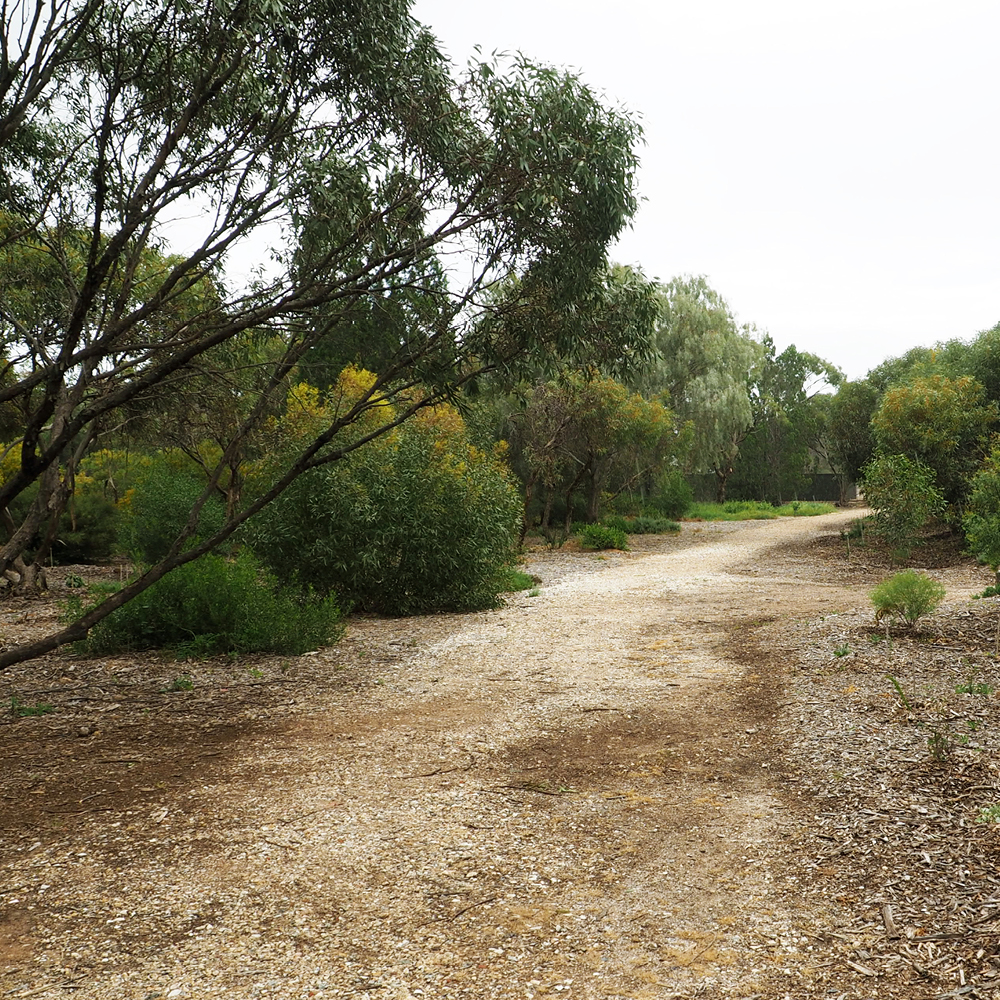
The Wirra Wonga site at Enfield and the Pilya Yarta site at Smithfield. None of these are what the Green Burial Council would describe as genuine examples of natural burial, but they are a couple of examples of the best on offer. We have some to go to match the examples found in the UK and the US, but they are a start and better than nothing.
More on the Wirra Wonga and Pilya Yarta burial grounds here.










 Die-alogue Cafe