
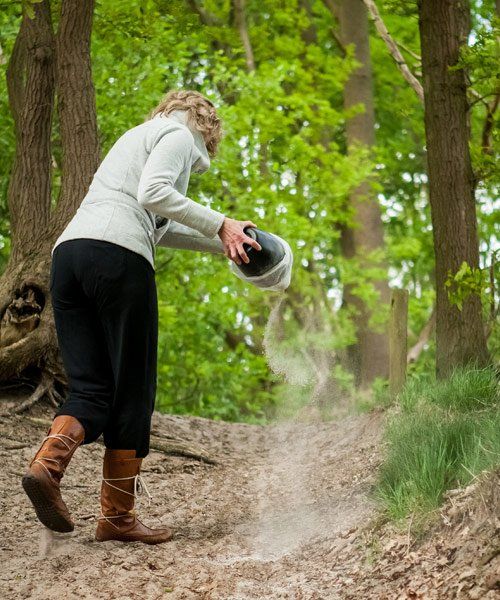
There are many rules and supposed regulations around the scattering of ‘ashes’ – the cremains – of someone who has died.
This story reminds us that various authorities, namely those of a religious nature, have rules and protocols that they require their adherents to abide by.
Having noted this, the flouting of these rules is widespread. And, this is the crux of the matter, who is out there supervising and monitoring the families of the deceased to see what they are doing? No one.
The latest group to see that perhaps having rules that few people follow is a bit pointless is the Catholic church. Georgie Hewson writes: The Vatican softened its stance on what Catholics can do with a loved one’s ashes. But there are still rules, (ABC News, 13 Dec 2023)
The Catholic Church has relaxed its rules on what families can do with a loved one’s ashes when they pass. The changes, allow Catholics to store a small part of the ashes in a place that was dear to the deceased. It’s a small but significant change for Catholics, who make up 25 per cent of the Australian population.
The church first permitted cremation in 1963, but it has been a point of contention ever since. Here’s what it means. What were the rules?
In the most recent previous guidance in 2016, the Vatican said the ashes must be kept in “sacred places” such as a Catholic church or cemetery.
Vatican’s ashes instructions: The ashes were not to be kept at home, divided among family members or scattered to the wind. It warned that a Christian funeral could be denied to those who request that they be scattered. The 2016 instruction, published in the lead-up to All Hallows’ Day, which honours the dead, said “new ideas contrary to the church’s faith have become widespread”.
Only in “grave and exceptional cases” would the ashes be permitted to be kept in a home, the church said. “It is not permitted to scatter the ashes of the faithful departed in the air, on land, at sea or in some other way, nor may they be preserved in mementos, pieces of jewellery or other objects,” it said.
For centuries, the practice was banned because it clashed with teaching about resurrection of the body in the Last Judgement.
Truth be known, these rules will be relaxed again in the future, since they are not adhered to by their adherents. It takes a long time for the upper echelons of these large organisations to ‘get it’. Read the full story at the highlighted link in the headline.


