In: WA’s voluntary assisted dying laws have been in place for a year. Have they served their purpose? by Keane Bourke (ABC News 1 July 2022) a story about WA’s voluntary assisted dying laws and the doctors who look back at the year since they came into effect.
For the last year, Angela Cooney has been doing the opposite of what doctors are normally trained to do – she has been helping people end their lives.
Dr Cooney is often their first step in accessing Western Australia’s voluntary assisted dying scheme, and in many instances, also the last.
For some of the more than 171 West Australians who have used the scheme since it came into effect exactly a year ago, she has been there to help them, and their families, in their final moments.
People who accessed the scheme had an average age of 73, with slightly more men than women following it through to the end.
Of those, 65 per cent had been diagnosed with cancer-related conditions, 15 per cent were neurological-related and 8 per cent had respiratory issues.
The vast majority, 79 per cent, were in the metropolitan area, with the remaining 21 per cent spread across the rest of WA.
Those figures are roughly in line with how WA’s population is divided between the city and the country.
From opponent to advocate
About 20 years ago, Simon Towler was the state president of the Australian Medical Association, arguing on radio against euthanasia campaigner Philip Nitschke.
Now he is one of the state’s leading VAD providers, having seen both the public’s demand for voluntary euthanasia but also the distress of families who were left without a choice at the end of loved one’s life.
“There was a lot of conversation around VAD — that it’s going to be wealthy, western suburbs, ageing males who will access VAD,” he said.
“That has not been the experience in this state.
“We’ve had everything from very wealthy people through to very poor people, we’ve even had Aboriginal people who’ve accessed VAD when there were comments [saying] that would not happen.”
And while he admitted it could be “terrifying” to be involved in, he described the “absolute privilege” to be part of the process.
terminally ill with a condition causing intolerable suffering
likely to die within six months, or 12 months for neurodegenerative conditions.
They must make three requests to die – two verbal and one written – with two independent doctors overseeing the process.
Once the requirements have been met, a person can choose to either administer the VAD substance themselves, or have it done by a qualified doctor or nurse.
In: When the end is nigh, it’s best to avoid hospital, Ken Hillman (SMH October 31, 2009) is speaking from years of experience and first hand knowledge.
Many of us will spend the last few days of life in an intensive care unit. For many, it will be a painful and futile experience, causing unnecessary suffering for the patient and loved ones.
Once death was treated as a relatively normal and inevitable experience. It is now a highly medicalised ritual. Now, when someone who is old and near the end of their life suddenly or even gradually deteriorates, the ambulance is called. The paramedics cannot be discretionary, even when it is against the wishes of the patient. The role of emergency rooms is to resuscitate and save lives, and package the patient for admission to hospital, whether active treatment is appropriate or not.
It is difficult to get off this conveyor belt. The reasons why are many and complex. Unreal expectations of what modern medicine can offer, reinforced by everyday stories of the latest medical miracle; the inability of politicians and funding bodies to rationally limit resources for end-of-life care without accusations of neglect or even murder; the difficulty of progressing this discussion in a society with such diverse opinions; the increasing specialisation of medicine; the practical fact that it is easier for busy clinicians to continue active treatment than to undertake the difficult and time-consuming business of talking to relatives and patients about dying.
All of this is exacerbated by a health system driven by fees for services, with little incentive to embark on the difficult business of managing dying. There are the ethical issues and the fear of litigation from a predatory legal system.
All these factors mean it is increasingly likely that a patient will not be plucked off the conveyer belt until everything medical has been administered and the last few minutes of life squeezed out.
There are limited provisions for rescuing these people and providing more appropriate care. My specialty of intensive care often acts as a surrogate end-of-life service at unsustainable cost to society.
NOTE: Ken Hillman is professor of intensive care at the University of NSW. This is an extract from his book, Vital Signs. His more recent book is titled: A Good Life To The End.
In the program: From Lifestyle to Deathstyle, Rachael Kohn (ABC RN The Spirit of Things, Sunday 19 July 2009) speaks with a guest who knows the deathstyle subject very well.
Baby Boomers invented ‘the lifestyle choice’ but now they’re choosing a death style, the natural way of death. Zenith Virago, co-author of The Intimacy of Death and Dying, has established the Natural Death Centre in Byron Bay based on an English model, and set up a natural burial ground in Lismore, in northern NSW. Grief can be a debilitating emotion, but voice empowerment coach Ganga (Karen) Ashworth uses voice training to ease the process. More from her later, but first …
Some people are trying to make a difference in the way we cope with our demise and even our deaths and funerals. Zenith Virago is one of those Baby Boomers who decided that if life didn’t need to follow the usual patterns laid out by our commercially driven society, neither did death. She’s been living and working in Byron Bay and is at the forefront of a cultural change that may see us do death and burial differently.
Click on the links to listen and to read. Well worth the minutes in both instances.
It’s at times like these, when there is so much discontent and so much inequality between those at the top and those lower down, that we need some reminders that it doesn’t have to be like this. Indeed in times past, it was very different.
A friend shared this recently …
An inspiring article from the Sydney Morning Herald is worth passing around …
PICTURE: Edward “Weary” Dunlop, as depicted in the video noted at the end of this story.
Mate ship values were enhanced in WWII, when Colonel Edward “weary” Dunlop developed a collective (socialist) approach to looking after his men, ensuring the fit looked after the sick, and the young looked after the old, especially on the deadly Japanese Burma railroad.
Tom Uren learnt those values from Weary Dunlop, and Tom mentored Albo with them, so that Albo made a great promise to all Australians on election night.
The best excerpt is:
“In 1987, he took Albanese to South-east Asia – the young man’s first trip abroad. In Thailand, Uren took Albanese to Hellfire Pass.
Albanese held the big man’s arm as they walked into the deep cutting, fearful Uren would faint beneath the storm of his memories.
All these years later Albanese, opening the election campaign that led to the prime ministership, declared: “We will look after the young, we will look after the sick, we will look after our older Australians. No one held back. No one left behind.”
It was a rewriting of Weary Dunlop’s wisdom that Tom Uren had made his own when not much more than a boy, struggling to survive in a pitiless bamboo jungle.”
* Sankrit – is an ancient Indo-European language of India, in which the Hindu scriptures and classical Indian epic poems are written and from which many northern Indian (Indic) languages are derived.
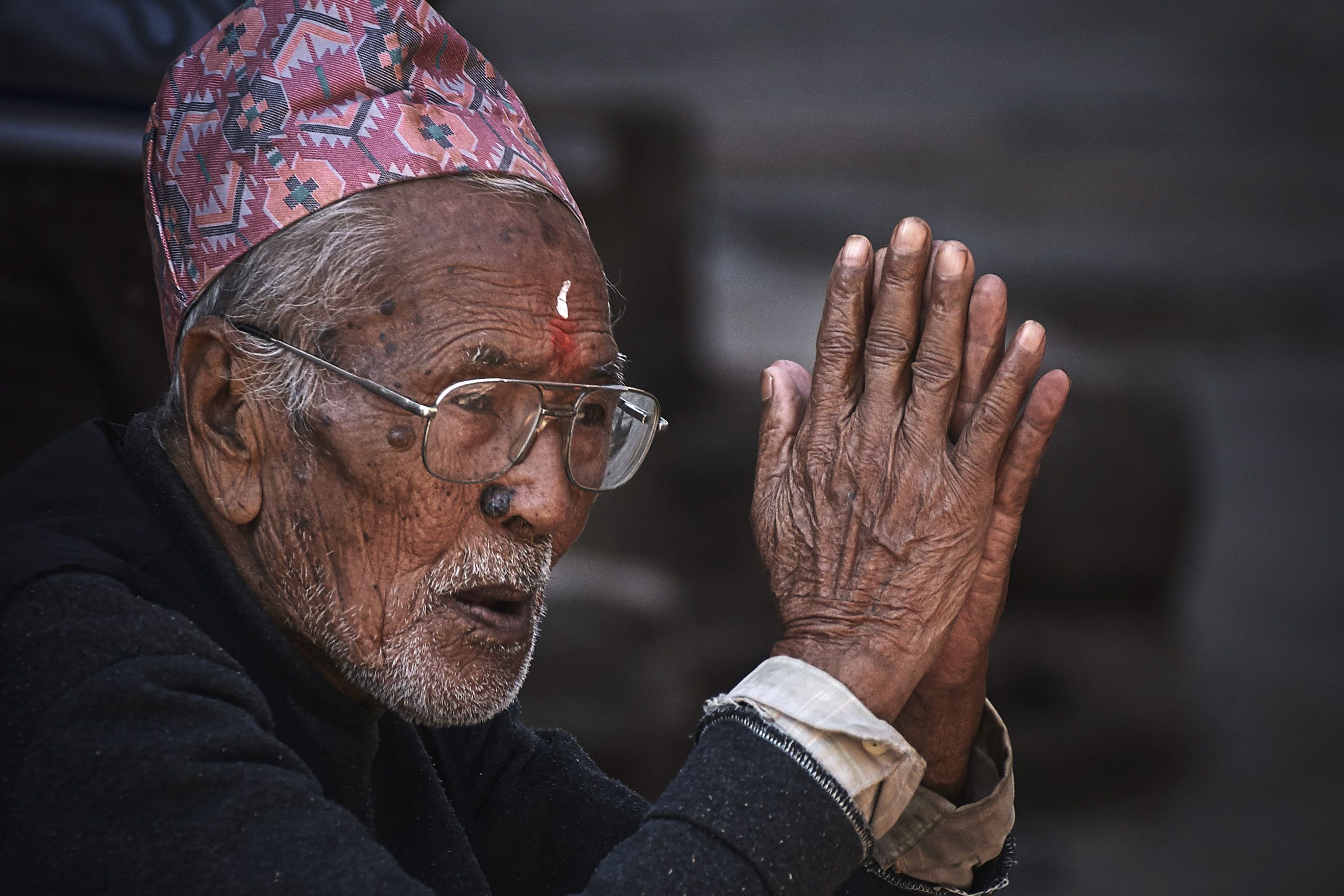
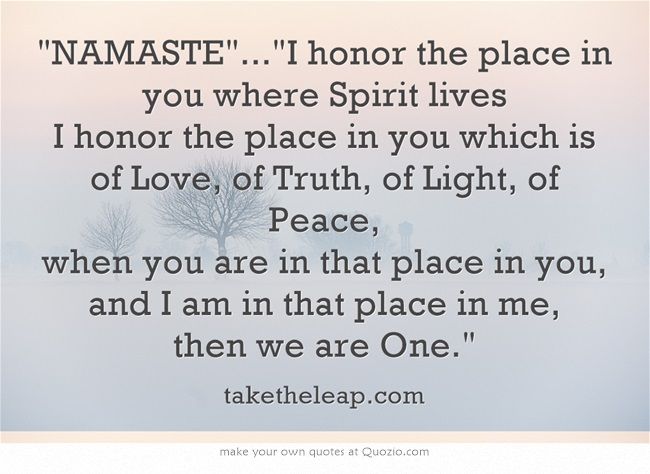
Is this another variation on the theme of stop and smell the roses? … Of pause and take a deep breath and feel the freshness of the air envelope us? … Of the old Christian invocation: Peace be with you — and also with you.
Depending on ones perspective we each need a time out, a way to be more civil with each other and with the earth we call home
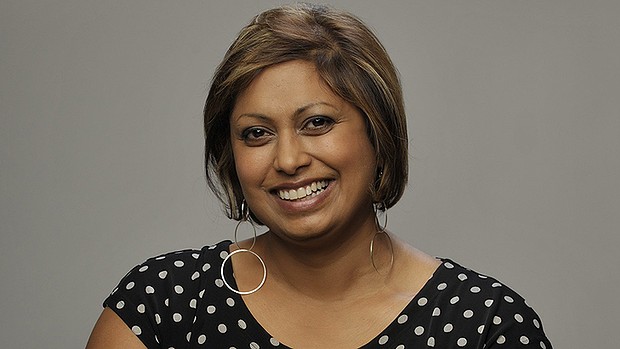
Broadcaster and passionate gardener Indira Naidoo suffered heartbreak in 2020, when during Melbourne’s first lockdown, one of her two younger sisters committed suicide. This book, The Space Between the Stars, is her attempt to make sense of it all, and her account of how nature has helped her heal.
PICTURE: Indira Naidoo – precious books include The Edible Balcony and The Edible City
For as long as I can remember, there has always been just the three of us. Three sisters. Only a year between each. Inseparable. It’s been like that for almost 50 years … Until my youngest sister walked out into her suburban backyard and took her life.
Is it possible to ever heal a tear in your universe?
After her younger sister died suddenly, broadcaster Indira Naidoo’s world was shattered. Turning to her urban landscape for solace, Indira found herself drawn to a fig tree overlooking Sydney harbour. A connection began to build between the two – one with a fractured heart, the other a centurion offering quiet companionship while asking nothing in return.
As Indira grappled with her heartbreak, an unnoticed universe of infinite beauty revealed itself: pale vanilla clouds pirouetting across the sky, resilient weeds pushing through cracks in the footpath, the magical biodiversity of tiny puddles. With the help of a posse of urban guides, she began to explore how nature – whatever bits of nature are within reach – can heal us during life’s darker chapters, whether nursing a broken heart or an anxious mind.
She marveled at the ants and the microscopic plants had the strength to make their presence known through gaps in the walls. And she found solace in the garden, which became an act of hope and acceptance. “Gardens are where we sign a pact with nature,” she writes. “Nature will do her bit, and we must do ours. Yes, something may die but something will grow as well. We can’t ask for more than that,” she adds.
The Space Between the Stars is a heart-rending, at times funny, and uplifting tribute to love and our innate need to connect to the natural world, a celebration of the reassuring cycle of renewal that sustains and nourishes us all.
As long as you can see the stars, you can never truly be lost.
What happens after we die continues to fascinate, and inspire people to innovate.
In: Death is not the end… well, not for sustainable living, anyway. Michaela Burns (Renew Issue 159, Apr-Jun 2022) investigates the intersection of sustainability and death. Some extracts follow…
Whether we embrace it or do our best to pretend it’s not going to happen to us, death is a part of life.
Burial, cremation and carbon dioxide
This wasn’t something people had to consider, of course – previous generations posthumous preferences were rarely informed by the indirect impacts of their death on people they’d never met.
On average 480 Australians die every day, with about 70 per cent being cremated and 30 per cent choosing cremation.
This means the simple act of putting to rest – burying and cremating – each person who dies on a given day in Australia will generate the equivalent of 53,760kg of CO2 … more than twice the amount that a single living Australian generates each year.
The alternatives to the big two – burial and cremation
Green funerals
This is as much about what we don’t have as it is about what we do. We tend not to go for the lavish heavily adorned coffin with gold trim all round – low key being very acceptable. We tend to say no to a commercial floral arrangement, preferring flowers from a family or friends garden. We say yes to natural burial site rather than a lawn cemetery that requires regular maintenance. In other words we take into account the cost to the Earth as much as we look at the financials and social status.
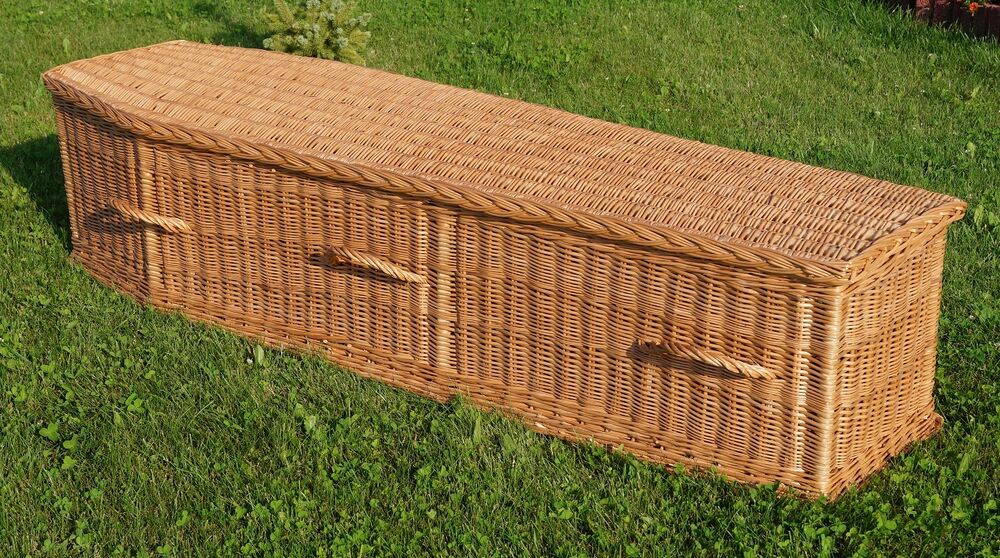
Wicker caskets and coffins
People have been making furniture and containers from wicker for over 5,000years. It is the oldest known method for such construction. It can include willow, rattan, seagrass, reed or bamboo. They are supposedly cheaper to make and more sustainable that those made of wood – uncles it’s reclaimed. Wicker coffins and caskets are generally constructed without the use of toxic varnishes, glues, plastics or metals. The plants used replenish themselves quickly. They also take less time to decompose and the nature of the material allows more oxygen to reach the body, meaning anaerobic decomposition, and the accompanying release of methane gas, is reduced.
Bio urns
There is more choice today than there was ten or twenty years ago. Urns of the past were often of the ceramic type adorned with artwork – as much a mantelpiece display as a container for human remains. They were certainly intended to stay around for a long time, having been fired in a kiln at high temperatures and not about to biodegrade anytime soon. Enter the bio urns available today and the choice seems limitless. The two most popular in Australia are: Soul Trees and Eco Water Urns. But check around for others. We need to understand that what we call ashes, what’s left after a body has been cremated, is actually cremains – the crushed bones of the deceased person. The body has been incinerated at such a high temperature that the skin and organ tissues are evaporated off along with the water content (70-75 per cent), so the ‘ashes’ content is small compared with the total urn contents, mainly ground up bones. This is what we get given when we collect the ‘ashes’. But when all is said and done, what’s wrong with a cardboard shoe box? Why the need for all the manufacturing that goes into a vessel that’s going to be buried or even emptied with the contents scattered or shared with family members, if that is the wish of the descendants. The rules that surround this area are made up. There is no obligation to follow what a commercial operator out to make a profit might tell us is the norm or respectful. There’s nothing disrespectful in being as Earth centred as possible, in ones thinking about this final act of returning to that place from which we came – ashes to ashes, dust to dust. We are nothing more or less than conscious cosmic dust.
Proponents estimate that this process produces less than 10 per cent of the emissions emitted by traditional furnace based cremation, and the lower temperature means that pollutants like mercury are not released during the process they can be safely recovered after the hydrolysis process is complete, along with objects like hip replacements and pacemakers.
The process received publicity in early 2022 with the death of South African anti-apartheid advocate Archbishop Desmond Tutu, who chose it for himself. Water cremation is relatively new to Australia. Victorian company Aquamation has offered the process since 2009 and still remains the main provider.
Mushroom burial suits
While it’s not yet available in Australia, this unique idea is stirring up well needed conservations around green funerals and the impact buried bodies have on the environment. The mushroom burial suit – or Infinity Burial Suit, as it is advertised in America – is a biodegradable garment for the deceased that aims to neutralize contaminants that may exist within the body. It uses a form of mycoremediation, a process whereby fungi act a s a natural composter. The fungi secrete several extracellular enzymes that are capable of decomposing and digesting the chemicals that bodies create as they decompose.
Leaving our body to science.
This could be to the body farm operated by Australian Faculty for Taphonomic Experimental Research (AFTER) under the guidance of the University of Technology Sydney (UTS).
There are also anatomy departments at other universities such as the University of Newcastle or University of Sydney or UNSW.
Other little things that matter
To further minimise ones impact, other things can be considered.
Creating an electronic order of service, rather than distributing paper programs; Dressing a loved one’s body in biodegradable materials like cotton, silk, hemp or wool; Planting a tree in memory of the deceased person; Ensuring any flowers placed or left at grave sites are free from petroleum plastic, and packaging is likewise; If the opportunity presents itself, choose sustainable transportation of the deceased from the place where the funeral service is held to the gravesite or other venue; Consider a waste free after funeral event catered for by family and friends held in a community hall or a park or garden – there’s no rule that says we have hire the funeral operators dining facilities.
Funeral practices around the world
Not that these are available in Australia, but there are many other ways to deal with the dead. Sky burial is one used in Northern India by Tibetan Buddhists. This involves leaving the body to be consumed by vultures. It is seen as a gift to the universe and a good omen.
What works for one culture doesn’t work for another.
What we need to do is be well informed of the choices available and advocate for methods that leave the smallest footprint in terms of ecological impact.
In other cultures the body is seen as a vessel, a thing which serves no-purpose once the soul itself has passed over. Perhaps this is something that Australians can learn too – and letting go of the desire to hold on, we also find a way to preserve the Earth for those who must keep on living.
This post provides a moment to pause and reflect on the life of a person who made an enormous contribution to humanity. Three extracts follow …
Not for oneself, but for others: A tribute to Thomas E Lovejoy (1941–2021), by H Bruce Rinker. (Ecological Citizen, Vol 5 No 2 2022) IN MEMORIAM | http://www.ecologicalcitizen.net H Bruce is a forest ecologist and science educator who lives in the Shenandoah Valley, in the US.
Non sibi sed cunctis: Not for oneself, but for others. This is the motto of the Millbrook School, founded in 1931. It’s the only school in the United States that has an accredited zoo (the Trevor Zoo), with an endangered-species breeding program that’s run by specially-trained high school students.
Millbrook School is the alma mater of Thomas E Lovejoy (1941–2021). He was in the class of 1959, and while enrolled there he was the student head of the Trevor Zoo. Long after his graduation, Tom remained loyal to Millbrook. Years later, at the public dedication of the Zoo’s Environmental Education Center, in late September 1995, Tom said: “It is the failing of American education that by and large still produces a citizenry largely ignorant of the biology on which human existence depends. It is my personal view that the destructive behaviour of the current Congress with respect to the environment would be very di3erent were there more widespread understanding of biology. It is this very understanding – through the wonder of living things – that we may begin to understand our own survival as dependent on the planet’s biodiversity.”
Later …
Tom’s prolific writing includes over 200 scientific articles and a host of books about the world’s tropical rainforests, and about the connections between biodiversity and climate change. Indeed, Tom was a prescient science analyst of the impending adverse impacts of climate change on biodiversity – impacts we are seeing in our time. He was an early practitioner of the UN call for action: “Think globally, act locally.” Tom’s local actions included weekly attendance of spring and autumn weekend “Power Bird Walks.” These occurred on the campus of Madeira School (next-door to his McLean home), and were led by his naturalist, bird photographer friends and teachers, John and Lee Trott, founders of the Burgundy Center for Wildlife Studies in West Virginia. Often attending those walks were renowned scientists and politicians, along with their students and community friends.
It is not well known to folks outside the VAD movement that many people of faith are and have been for many years, supporters of those wishing to die with dignity. We reprint below this message from Ian Wood, National Co-ordinator, Co-founder and Spokesperson, for Christians Supporting Choice for Voluntary Assisted Dying. As a voice for reason we acknowledge his commitment that dates back to well before 2009.
PICTURE: Going back to 2015, Voluntary Euthanasia Party candidate for the Legislative Council Geoffrey Williams (left) and national convener for Christians Supporting Choice for Voluntary Euthanasia. Photo supplied.
Dear NSW Member/Supporter of Christians Supporting Choice for Voluntary Assisted Dying,
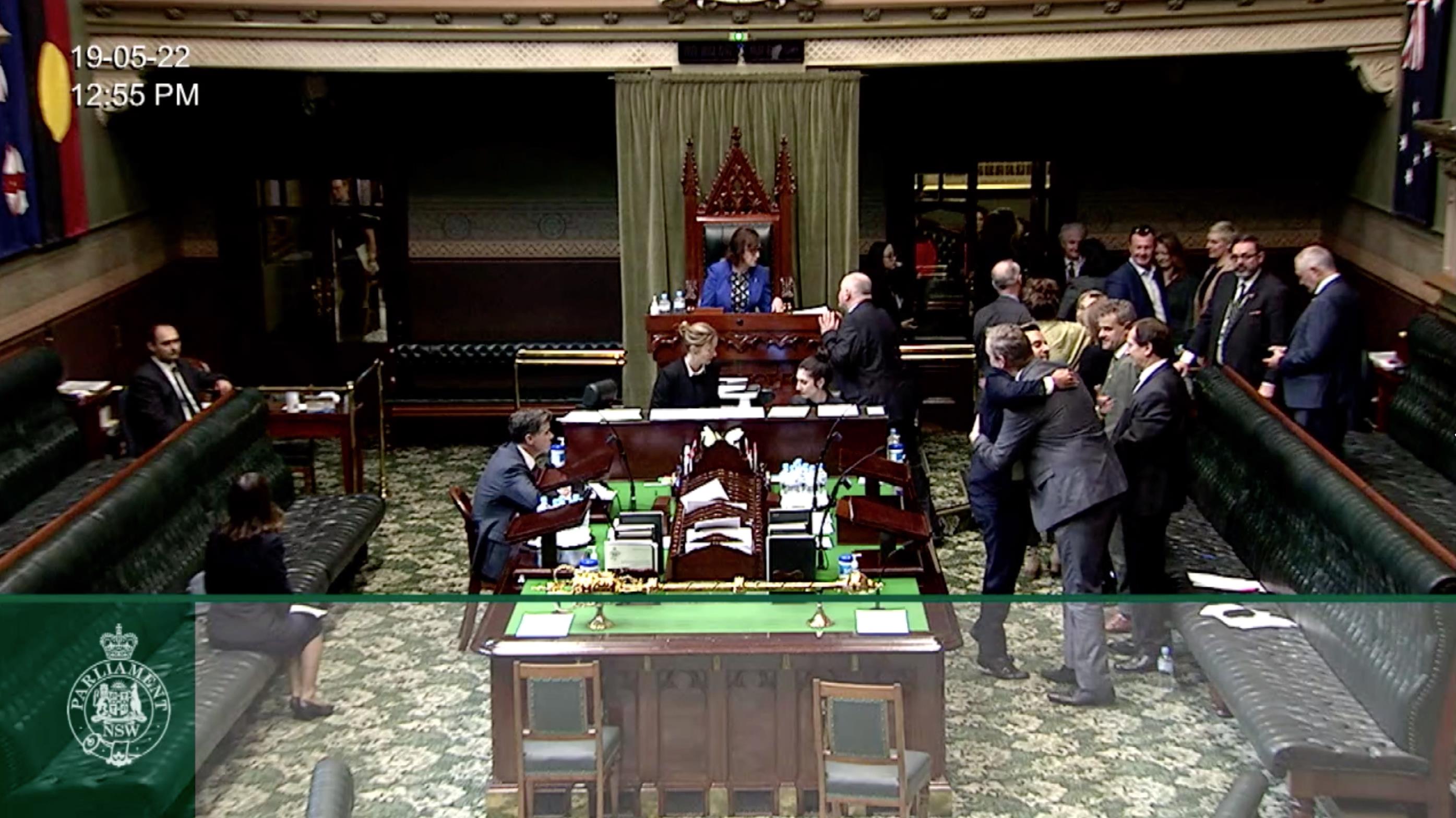
As you would be aware by now, on May 19, 2022, New South Wales became the 6th and final state to pass a VAD Bill.
This is an emotional time for me, as I think back to my late friend and mentor, Rev Trevor Bensch, who co-founded our group with me early in 2009. Trevor was also a hospital chaplain, and some of what he had witnessed led him to support the VAD choice.
Rev Trevor Bensch in 2009.
I must thank every person who has written and spoken to MPs, those who have shared their stories of loved ones who endured needless suffering at the end of their lives, every Voluntary Assisted Dying Group in each state and territory, Andrew Denton and the team at Go Gentle Australia, Rev Dr Craig de Vos B.V.Sc., Dip.P.S., B.Th.(Hons.), Ph.D., and so many others who have assisted me in our part in reaching this goal. Huge thanks go also to Alex Greenwich MP, all the co-sponsors of the NSW VAD Bill, Adam Searle MLC for his work in the Legislative Council, and every MP who spoke and voted to pass the Bill.
Of course the final step in VAD legislation throughout Australia is to have the Right of the Territories to enact VAD legislation restored. This was taken away in what is known as the ‘Andrews Bill’ by the Howard Government, after our Northern Territory under the guidance of Marshall Perron became the first jurisdiction in the world to pass a ‘Rights of the Terminally Ill Act 1995’ to give end of life choice. Given the result of the Federal Election, this now looks much more possible.
We do need to be aware that it will be 18 months before VAD actually becomes available in NSW, to allow for setting up all the facets of the Bill re access.
To those who have opposed this legislation – we do remind you that the key word is voluntary and there is no compulsion for you to use the law in any way. We all support more funding for palliative care, and better access to palliative care in remote and country areas, but also know that the Voluntary Assisted Dying choice is needed in addition to the best possible PC.
I do hope that you will remain with our group while we become pro-active on behalf of the Territories as soon as the Federal Election result is finalised.
Best wishes, Ian
Our Belief: “We believe that as a demonstration of love and compassion, those with a terminal or hopeless illness should have the option of a pain-free, peaceful and dignified death with legal voluntary assisted dying.”
Ian Wood National Co-ordinator, Co-founder and Spokesperson Christians Supporting Choice for Voluntary Assisted Dying christiansforvad.org.au/
It’s been a long time coming, but these two stories note how it panned out over the last 24 hours. The first reference is ABC News and the second is from Go Gentle Australia.
A race against time as Voluntary Assisted Dying Bill faces long list of amendments in the NSW upper house, By Ursula Malone. ABC News, Wednesday 18 May 2022
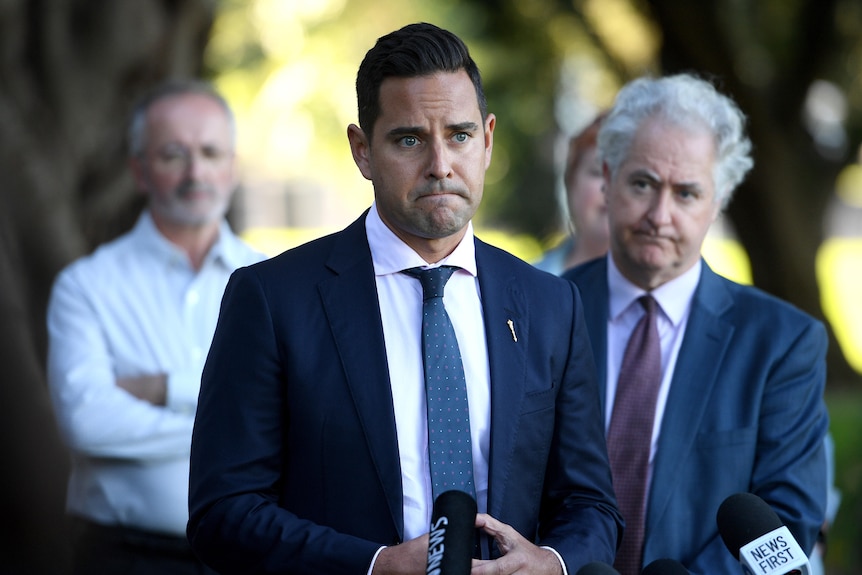
Independent MP Alex Greenwich says he is hopeful his Voluntary Assisted Dying Bill will be passed by the NSW upper house by midnight tonight and is pleading with MPs to not use stalling tactics.
Key points:
The Voluntary Assisted Dying Bill will have its third reading in the NSW upper house today
Around 100 amendments have been listed for debate
The upper house has set aside time until midnight tonight
More than 100 amendments will need to be dealt with as the Legislative Council holds a third reading of the bill, which was passed in the lower house in November last year by 52 votes to 32.
The upper house has until midnight to debate and vote on the proposed legislation.
“I hope members of the upper house respect the mandate the lower house has provided them with and respect the will of the people of NSW to pass this bill and I hope that time is not wasted,” Mr Greenwich said.
“Not only will that be disrespectful to the parliament but what it really does is prolong the unnecessarily cruel and painful deaths of some people with advanced terminal illness.”
Mr Greenwich said he would be in the chamber to watch what he hoped would be a “robust and respectful debate”.
But he is fearful that opponents of the bill will purposely try to extend the debate so that the house runs out of time.
“It’s a bit late now to be lobbing in hundreds of amendments when the parliament has had this bill for the past 12 months,” he said.
“I would ask you to focus on the people this reform is for rather than the politics of delay.”
Politicians from both major parties have been given a conscience vote on the bill.
NSW is the only state yet to pass legislation to allow Voluntary Assisted Dying (VAD).
“People with advanced and cruel terminal illness in NSW deserve the same end of life chance as in every other state,” Mr Greenwich said.
………………………………………..
NSW makes history, passes Voluntary Assisted Dying law
At last! After 50 years of tireless advocacy, the Voluntary Assisted Dying Bill 2021 has passed NSW Parliament.
The Lower House voted the Bill into law after the Upper House also approved the Bill with just a handful of amendments.
This is a revolution in end-of-life care, and an evolution in compassion.
Terminally ill people in NSW finally have a choice not to suffer – like Australians in every other state.






 Die-alogue Cafe