Terramation: Time to catch up with the rest of the world

Human composting is applicable regardless of where we live on this planet. It’s actually the most practiced way of disposing of animals that have deceased. After all, every other species simply rolls over and returns to the Earth so to speak. So why are we humans any different. Only because culture deems to take another approach.

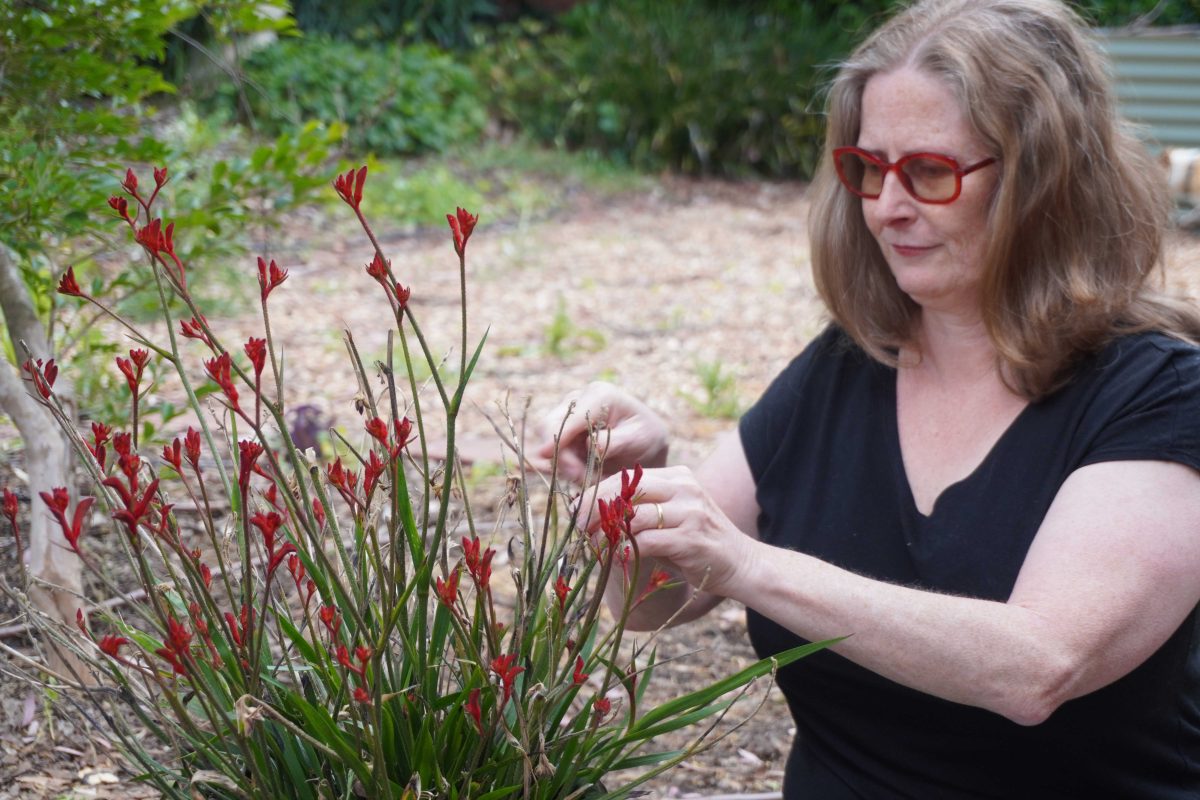
Earthly Remains founder Tui Davidson. Photo: Tui Davidson.

The Aussie approach has started and we support it. Here’s the story of what a Canberra resident is doing to kick start the process and get some action on the ground.

This is the story of Tui Davidson as reported in Region News …

Burial and cremation are the tried and tested options for sending off your loved ones when they throw off this mortal coil.

But Canberra woman Tui Davidson is advocating for another, cheaper, more “sustainable” option to be made available to local families – one she expects is not far away.

It’s composting, also known as “terramation”. Yep, the breaking down of the human body by the same means as your kitchen waste, and within as little as 60 days.

“No one in Australia is doing it yet, but it is done overseas,” she says.

Several US states allow it, as does Sweden, and the UK Government is currently “welcoming” proposals to regulate new end-of-life methods that include it.

The more Tui Davidson investigated terramation, the more she “loved it”.

“It harnesses the body’s natural energy. It’s very good environmentally, and it’s just the most natural process there is. Nobody wants to think about the way your body breaks down after you die, or the fiery cremation, but if you had to think about it, I think this is definitely the best way to go.”

Full story at the link …https://region.com.au/definitely-the-best-way-to-go-canberra-woman-wants-to-legalise-human-composting/891745/

Posted in Uncategorized | Leave a comment

Return to the Earth in a most natural way

It’s been talked about for years. Why not just compost a human persons remains rather than go through all the rigmarole of cremation or digging a hole for a grave. It seems we’re getting there. Here’s a story that explains how ..

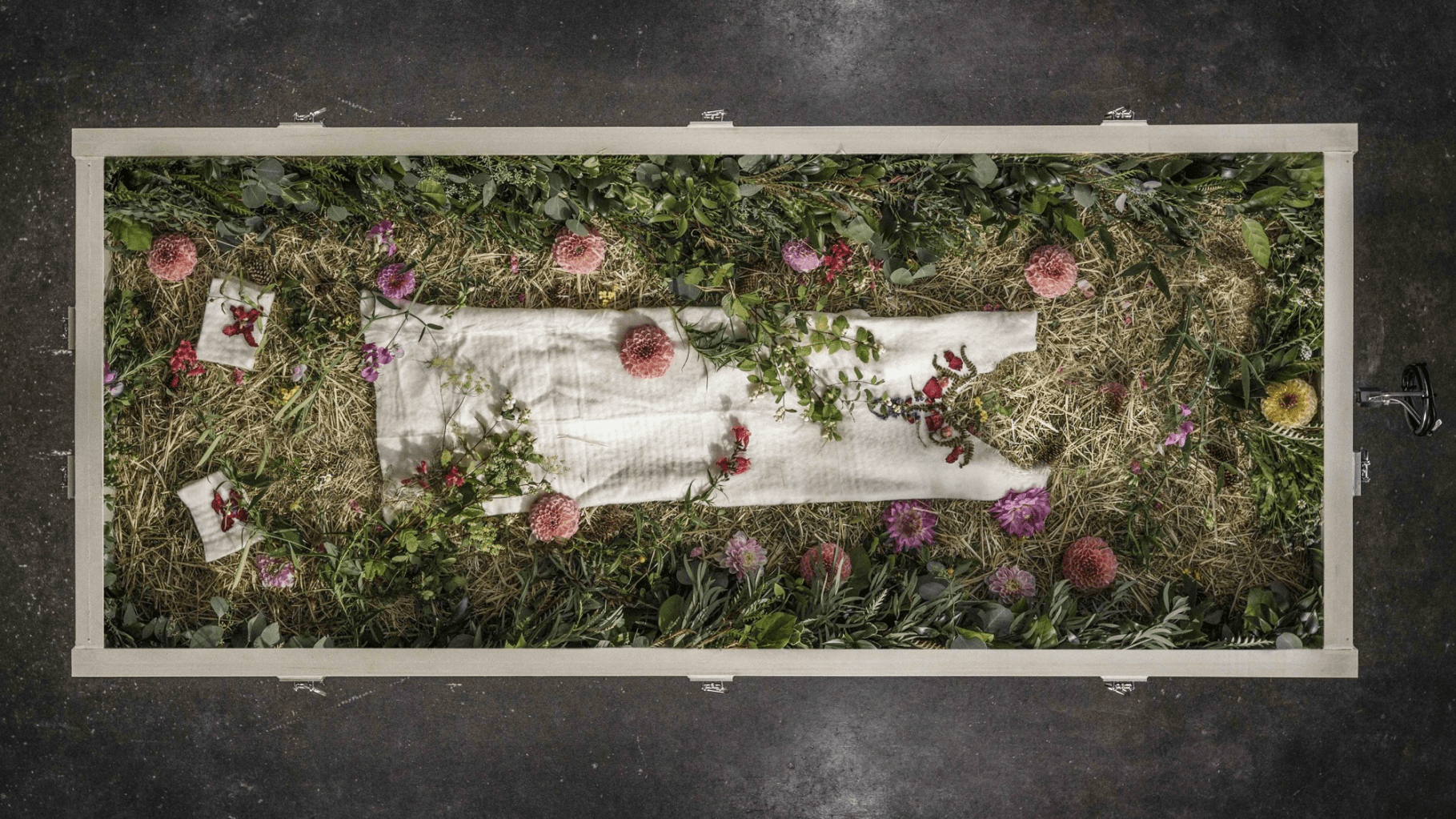
During human composting, the body is placed in a specialized polycarbonate vessel that’s eight feet long, three and a half feet wide, and three and a half feet tall.   Image: Return Home

“Essentially, we’ve optimized what would happen in nature,” says funeral director Brienna Smith, chief operating officer of Return Home Green Funeral Home in Seattle. “It takes about 60 to 90 days for the human body to transform from what it is originally—flesh and bone, like us—into compost.”

Smith describes the process of Natural Organic Reduction—also called “terramation”—as “gentle, noninvasive, and slow-moving.” 

During the first step, the deceased is gently bathed with essential oil soaps. Their hair is washed, and their eyes and mouth are closed. They are then dressed in a soft, compostable garment—Smith says at Return Home, these are lovingly made by her own mother, Kim Yarger, who has dubbed them “Terra Couture.” Once the body has been prepared for terramation, it is placed in a polycarbonate vessel measuring about eight feet long, three and a half feet wide, and three and a half feet tall.

“We mix straw, alfalfa, and sawdust together at a very specific ratio to the person’s body weight,” Smith says. “We place the base layer of organics in the vessel, the person is placed on top of the base layer, and then there’s a second layer of organics. The person is sort of snuggled between the two layers.”

Once the deceased has been placed into the vessel, microbes begin to break down the remains. During this time, temperature is key.

“It’s the most beautiful thing I have ever seen—nothing is life-giving like this,” says Smith, who was formerly a traditional funeral director. “It’s such a mindful choice for people who have lived their whole lives having recycled and composted. It’s a way for them to feel like their death is aligning with the way they lived.”

Get the full story at this LINK … https://www.popsci.com/science/how-human-composting-works/

Posted in Uncategorized | Leave a comment

Headstone healing

DIY headstones make it more affordable to honour loved ones, by Toby Hemmings, ABC Central West, 6 April 2025

A 25-year-old Aboriginal man holds up a design to the camera.

Luke Parsons designed this indented concrete artwork in his father’s memory. (ABC Central West: Toby Hemmings)

Luke Parsons never had the chance to meet his dad.

The 25-year-old Wiradjuri man’s father died two months before he was born.

“Hearing all of his stories growing up, it pushed me to be a better person and show his story,” said Mr Parsons, who lives in Cowra in the NSW Central West.

Recently, he has been able to honour his dad’s final resting place with a headstone he has made himself.

“I came across this design on my phone and it sort of spoke his name, so putting that onto the plaque is pretty meaningful,” Mr Parsons said.

“I’ve been speaking to my older brother and sisters. They love it.

“The fact that something’s actually getting done about it.”

Headstone healing

Photo shows An Aboriginal woman standing among a group of colourful graves with mosaic headstones.An Aboriginal woman standing among a group of colourful graves with mosaic headstones.

An Aboriginal community in far west New South Wales works through grief for lost loved ones with a hands-on project using the art of mosaic.

Mr Parsons enrolled in a four-week course at TAFE NSW teaching people concreting skills to make headstones.

He has learnt how to make his own moulds, place and pour concrete, cure it and finish the surface.

He was also taught how to finish the base of the headstone so that the image sticks out from the surface like braille.

“By everyone doing their own design, it’s telling their own stories,” Mr Parsons said.

More HERE

Posted in Uncategorized | Leave a comment

A medico adds VAD – MAiD – to her professional practice, with support for the dying a high priority

To die with dignity has become a reality for those who so choose this option in Australia. But it hasn’t always been that way in other countries. Here is a report on how one doctor in Canada is approaching the subject. The more angles from which we can learn the better off we are in keeping death and dying on the agenda for us as we age. Facing up to the facts and realities is healthy and keeps us grounded in the sense that the end comes to all of us – ready or not. We say better to be ‘ready-than-not.’

‘We’re going to talk about death today – your death’: a doctor on what it’s like to end a life rather than extend one, by Dr Stenfanie Green, The Guardian, 15 March, 2025

Dr Stephanie Green, Dying with Dignity, Canada. Photo: Supplied

I used to focus on maternity and newborn care, but when Canada legalised assisted dying in 2016, I began helping people with a different transition.

Medical assistance in dying (MAiD), legalisation in Canada was passed in June 2016.

At the time I had been practising medicine for more than 20 years, trained as a family physician, and focused on maternity and newborn care, preparing women and their families for the profound transition a new baby would bring to their lives. But when it became clear the law was about to change to allow MAiD, I changed course with it, learning everything I could about this newly emerging field so that I could support people with their final wishes and their transition at the other end of life.

More at this LINK

Posted in Uncategorized | Leave a comment

Signs that the end-of-life may be closer than we think

When it comes to the end of a loved ones life, it can be helpful to know what the tell-tale signs are, so that we aren’t left floundering as to what’s normal and allowed to take it’s natural course, and what’s not. Noting the experiences of those who have been down this path before can help us be prepared and lessen taking knee jerk actions that are not in the best interests of the person dying.

‘It can be really frightening’: knowing the common signs that a loved one is dying can help in their final days, reports Lydia Hales, The Guardian, 16 February, 2025. The opening section is included here for our collective benefit – to be forewarned is to be forearmed.

Consistent with many previous posts on Die-alogue Cafe, preparation allows us to be better able to mitigate problems and be in a better frame of mind than being in a state of not-knowing – more in control of our emotions. This means we are better able to be of help and assistance to the dying person along with family and friends. Writes Lydia:

Death is confronting, heartbreaking and unpredictable – information and open discussions can make a difficult experience more meaningful

When I walked out of the hospital, where I had spent the last several days and nights curled on a small couch next to her bed, I felt like a stray root of some ancient tree that had accidentally broken out of the earth and into foreign air – wholly unprepared for the strange world I now found myself in.

I thought that when she died, maybe the sun would have fallen out of the sky. But it was still bright, golden – as vibrant as my mum had been. On the drive home along the Tasmanian coastline Mum had loved so much, the sea spread out to the horizon in rolls of brilliant emerald.

Being with her in the months, days and hours up to her death from cancer was the hardest thing I have ever done. It also felt like the most important.

And there was one piece of information that allowed us to recognise what was happening at a crucial moment: a sign that death was close.

This information was imparted by a nurse whose name I don’t know. She pulled us aside in the hospital corridor when it suddenly became apparent they wouldn’t be sending Mum home with a dose of antibiotics like the times before.

The nurse asked if we knew there are often changes to someone’s breathing shortly before death: alternations between periods of shallow breathing, deeper rapid breaths and sometimes substantial pauses known as Cheyne-Stokes breathing.

This meant that several days later, when her breathing did exactly this, rather than calling for a nurse to ask what was happening, my dad, brother, sister-in-law and I spoke to Mum as she died.

It meant Mum died hearing the voices of her family telling her how much we loved her; she died being held.

And further more ..

Ken Hillman, professor of intensive care at the University of New South Wales and director of the Simpson Centre for health services research, says “becoming weaker, not moving around as much, drifting in and out of consciousness” are all common.

As is delirium, which may range from confusion, drowsiness and delusions, to hallucinations, euphoria and agitation.

Hillman says the medicalisation of death – while alleviating a lot of suffering – can mean social and spiritual aspects are forgotten.

“We live in a death-denying society,” Hillman says, noting that since doctors are “programmed to cure people” even they can struggle to step back and recognise that someone is dying.

The full story is HERE
Posted in Uncategorized | Leave a comment

Better than whole of body burial, could composting be worth a thought

It’s been talked about for years. Every now and then we report on an organisation that taken up the idea with most notable being ReCompose in the United States.

Now here’s a new take on the idea that seems to be getting some traction, once again in the U.S.

Earth Funeral combines the human remains with mulch, wood chips and wildflowers to kickstart the composting process. Photo credit: Earth Funeral

In: Human composting is rising in popularity as an earth-friendly life after death, Ella Nilson, CNN, December 29, 2024 writes that:

‘The first time Laura Muckenhoupt felt a glimmer of hope after the death of her 22-year-old son Miles was the drive home from the Washington state facility that had turned his body into hundreds of pounds of soil.

“We’re going to grow him,” she remembered thinking. “We’re going to grow him, and we’re going to continue to be his parents and his sister and his friends.”

Human composting turns bodies into soil by speeding up “what happens on the forest floor,” according to Tom Harries, CEO of Earth Funeral, the human composting company the Muckenhoupt family worked with.

“What we’re doing is accelerating a completely natural process,” Harris told CNN. Human composting is emerging as an end-of-life alternative that is friendlier to the climate and the Earth — it is far less carbon-intensive than cremation and doesn’t use chemicals involved to preserve bodies in traditional burials.

Read the full story HERE

Posted in Uncategorized | Leave a comment

True stories make for good stories

A great movie based on the true story of an eccentric character most of us can identify with. Peter Gray thought it was such a good movie he gave it a 4 / 5 star rating.  He writes …

Filip Hammar and Fredrik Wilingsson, pushing the old car with Lars inside. Credit: supplied

Film Review: The Last Journey is a beautiful piece of storytelling about seizing life’s wonder, by Peter Gray, The Au Review, February 14, 2025.

In a time when there’s so much uncertainty in the world, a film like The Last Journey feels even more special and affirming as it projects pure beauty and an uplifting nature in telling its central story around two men and their determination to reaffirm life’s wonder for another.

Swedish journalists and television hosts Filip Hammar and Fredrik Wikingsson – known as Filip och Fredrik in their homeland – take their organic rapport on the road in The Last Journey, centering their attention around Filip’s ageing father, Lars, and the determination in giving him purpose in his “third act” of life.  At 80-years-old, Lars is a picture of fragility, and far from the bubbly persona we see him as during early moments of the film that show him singing and dancing about with his students and colleagues as he bids a 40-year teaching career farewell.

Though he retired almost two decades ago, Lars is still a far cry from what we know.  He’s simply waiting to die, and Filip and his mother Tiina, Lars’ wife, are getting quite distressed at his lack of motivation; Tiina, who is the picture of health, comments that he hasn’t left the house in nearly a decade.

Enlisting Fredrik, Filip concocts an outlandish plan to put the pep back in his father’s step.  What if recreating Lars’ most cherished family trip would reinvigorate his zest for life? Though Fredrick is concerned that Lars, who can barely walk, is hard of hearing, and clearly has an aversion to endeavours of the strenuous kind, may be supremely overwhelmed, he backs his friend’s idea to the end.  With an orange Renault and a line-up of specifically curated recreations to help Lars remember his family trip to France from years prior, Filip hopes for the best, but, quite often, has to brace for the worst, as his enthusiasm and Lars’ ability don’t always align.

To read the full review, visit HERE

Posted in Uncategorized | Leave a comment

Let’s not balk at having THE talk

Easier said than done, many people say. But that’s no excuse. There are lots of things people would prefer not thinking about let alone talking about them.

BUT PUTTING OFF talking only kicks the issue down the road. Sooner or later, that conversation has to be had, otherwise things can go horribly wrong – which is the case for far too many people, knowing that with a few minutes set aside to have THE talk can sort out a lot.

So. With March being the month when National Advance Caring Week falls – March 17 to 23 – let’s not balk at having THE talk. Let’s just get on with doing what has to be done. Get those Advance Health Care Plans organised.

As a refresher for those new to this process, as we age, maintaining good health becomes more important than ever and part of good health is good sound thinking that makes plans for future possibilities however they might play out.

When we are able to express our wishes about how we would like our health to be managed and our preferences for treatment options taken into account, is the time when we need to write them down and communicate them to relevant people in our circle. This is particularly so, if we lose the capacity to explain these things for ourselves.

The sooner we start this the better off we all are. It’s covering all bases so to speak, since no one knows what the future holds, and should some event occur that leaves us unable to get our message across, then we have these papers and people to speak for us.

In: ‘Nobody is talking about dying in place’, Anthony Caggiano (The Senior, Marcy 05, 2025) reports that: Jean Kitson, performer and writer has seen the best and worst of palliative care when her parents became sick. She is a patron for Palliative Care Nurses Australia, and has added her voice to calls for better access to palliative care. And to advance planning.

Jean is also the author of We Need To Talk About Mum and Dad.

“We all talk about ageing in place, but nobody is talking about dying in place,” she says. “Palliative care extends your life and extends the quality of your life.”

“I didn’t do all the due diligence that I talk about in the book where you go into residential aged care and you ask them all the questions and you dig deeply, especially things like, ‘Are you trained in palliative care?’ … ‘How do you manage people when they’re dying?,” she notes.

Her experiences have made her realise the importance of planning care for herself and clearly articulating what she wants, making herself comfortable and enabling family and medical professionals to support her decisions.

The message is simple: plan ahead, in advance, now, while things are hunky-dory (fine, satisfactory, going well). Getting life sorted means we move from a state of we ought-of to one of we sorted – literally. That’s reassuring. That would grown ups do. They get their business affairs, that includes us householders, in order. i’s dotted, t’s crossed. Sorted. No regrets. Relief.

Posted in Uncategorized | Leave a comment

An usher of a different kind

When we use the word usher, it usually refers to a person who guides theater going patrons to their seats.

Not in this case. In this context, we find that author Clover Brooks is writing about the people she ushers peacefully though their last days, collecting their final words into three notebooks: ADVICE, CONFESSIONS and REGRETS.

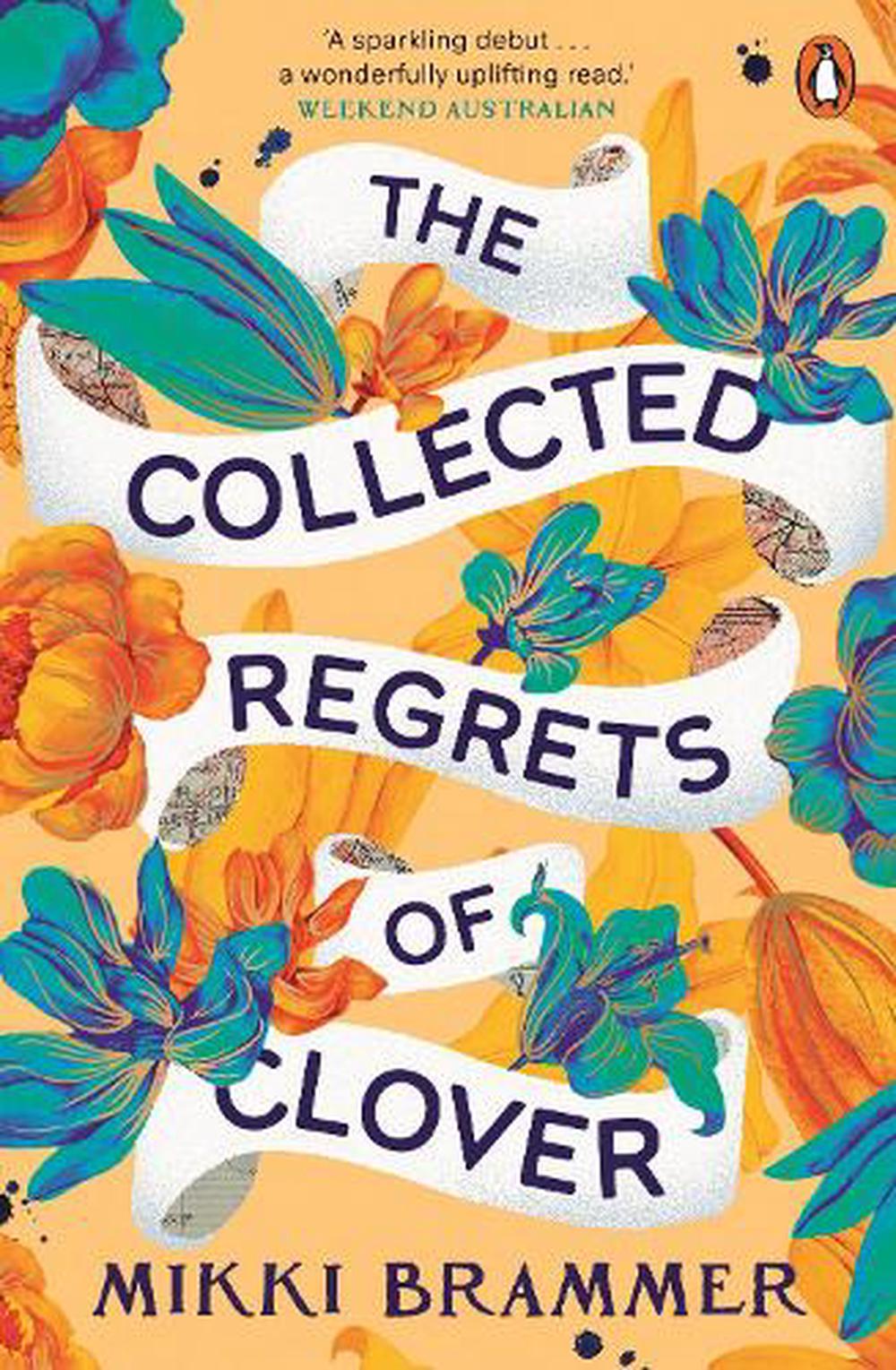
This is how goodreads describes The Collected Regrets of Clover, by Mikki Brammer …

From the day she watched her kindergarten teacher drop dead during a dramatic telling of Peter Rabbit , Clover Brooks has felt a stronger connection with the dying than she has with the living. After the beloved grandfather who raised her dies alone while she is traveling, Clover becomes a death doula in New York City, dedicating her life to ushering people peacefully through their end-of-life process.

Clover spends so much time with the dying that she has no life of her own, until the final wishes of a feisty old woman send Clover on a road trip to uncover a forgotten love story—and perhaps, her own happy ending. As she finds herself struggling to navigate the uncharted roads of romance and friendship, Clover is forced to examine what she really wants, and whether she’ll have the courage to go after it.

Probing, clever, and hopeful, The Collected Regrets of Clover turns the normally taboo subject of death into a reason to celebrate life.

This book is indeed a good read, providing insights into the fascinating world of the death doula, of which there were many in years past. It is a role that is making a comeback, albeit in a professional sense. Though there are many thousands of unpaid, home based death doulas who don’t give themselves that title, but do it anyway, out of the goodness of their hearts. They are fulfilling a task that has to some extent been industrialised / commerialised by nursing homes and other institutions, in keeping with the out-sourcing of what used to be normal domestic family care – right until those final days.

This book would be an ideal title for a book club, where members could relate their own experiences, adding to the rich tapestry of knowledge that has been swept under the carpet – considered taboo, held in denial in the false belief if we put of thinking about it long enough it will go away. But there ain’t no such as place as away, and delay does us no good, not now, not ever.


Posted in Uncategorized | Tagged , | Leave a comment

Outsourcing the final hoorah

It’s a subject that is timeless.  No matter who, what, where, or when, there’s an endless amount of interest in how we end up at what Stephen Jenkins aptly names ‘our ending of days’.

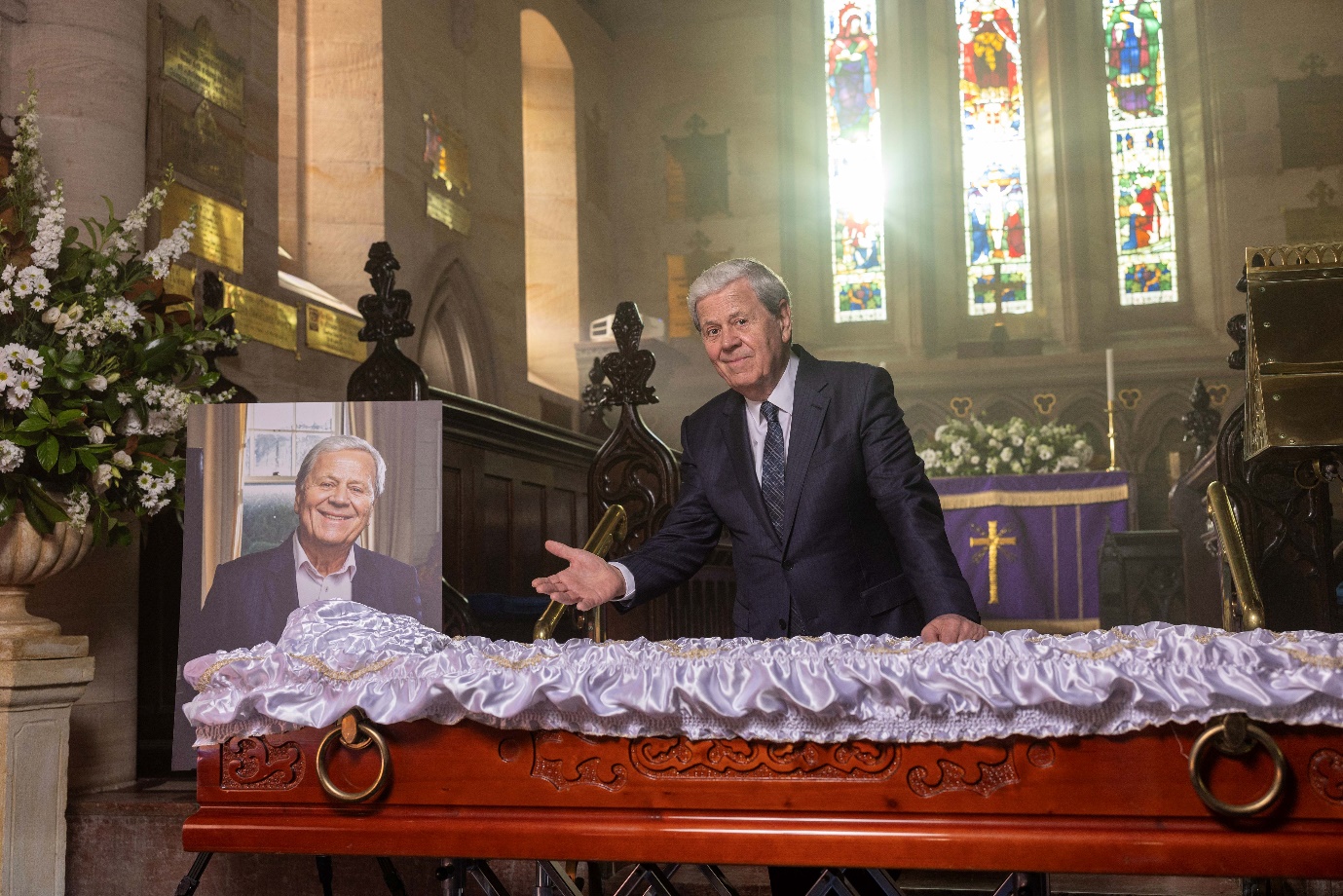
A scene from the SBS series Ray Martin, The Last Goodbye

It’s therefore comes as no surprise that one of Australia’s best known media figures, Ray Martin, at the invitation of the BBC has turned his mind to consider the ins and outs of laying the dead to rest, to put it politely, or getting rid of a human carcass, to be frank and blunt.

In: Ray Martin dives into the world of death and funerals in ‘The Last Goodbye’, Michael Di Iorio (SBS, July 2024), reports that:  Australia’s beloved journalist explores one of the nation’s last taboos – death – as he plans his own funeral in this new three-part series.

Ray discovers the trends, rituals, practicalities, and emerging tech around the way we lay ourselves to eternal rest. Meeting with morticians, medical students, undertakers and death deniers, Ray seeks to understand Australia’s relationship with death. What choices must be made along each stage of the dying act? Why do we choose certain ceremonies, songs and resting places? How do religions and cultures negotiate death differently? What options will open up to us in the future? And how much is it all going to cost us?

Like Ray, Australia’s largest age demographic, the ‘baby boomers’ are approaching the end-of-life cycle. They will reach the average age of death – 83 – before the end of this decade, a period academics are terming ‘peak death’. With our retirement-aged population expected to grow by 50% over the next 20 years, the conversations around our death processes, rituals and rights have never been more relevant or time critical.

Quickly discovering that most Australians don’t plan or even talk about funeral arrangements and only half have a will, Ray sets off on a quest to understand how we all approach death in our nation of differing cultures, religions and views and why it’s still one of our last taboos.

Ray Martin: The Last Goodbye is a poignant, revealing and, at times, humorous quest that will send Ray down the rabbit hole of dirges and vigils, cryonics and body composting, ancient rituals and inventive celebrations.

Ray Martin: The Last Goodbye premieres on Wednesday 14 August at 8.30pm on SBS and SBS On Demand. The three-part series continues weekly on Wednesdays at 8.30pm.

………………………………………………………..

Writing in Deadly Serious, Tim Elliott (SMH, Good Weekend, July 27 2024) reports on the SBS television three part series, Ray Martin: The Last Goodbye.

The way we say goodbye to the Boomers is not the way they said goodbye to their parents and grandparents. When Martin’s grandmother died, for instance, her body was prepared by the family at home: the kids were invited to look at her in the parlour and touch her.  But these days, most people die in hospitals or nursing homes, and body viewings are increasingly rare. As a result we’ve become fairly distanced from death. Indeed, the whole funeral industry is predicated on our determination to avoid it; too squeamish or bereaved, we retreat to genteelism, outsourcing our final journey to places like While Lady and Living Hope

Posted in Uncategorized | Leave a comment